10 July 2014

The Suzanne Farrell Ballet, 8 & 9 (matinee) November 2013: Program B, Duo concertant (2/3)

Nothing spectacular comes out of a retrospective five months late, but myopia will ensure that I condense my impressions into slightly more manageable chunks of writing. If that isn't victory, then at least it's slightly more digestible.

The real reason is that I can't seem to finish this review and might as well post what I have before I see the company again.

Program B: Pas de dix/Duo Concertant/Tempi de Valse/Agon
The Suzanne Farrell Ballet
Eisenhower Theater, Kennedy Center
Washington DC

Friday, 8 November 2013
Orchestra S105

Saturday, 9 November 2013, 1:30 PM matinee
Orchestra Q106

When done well, Duo Concertant looks almost spontaneous. What do I know, this is only my first and second live viewing of it, and my initial contact was with a dizzying Germany recording that was more endurance challenge than a watchable historical document.

Natalia Magnicaballi and Michael Cook danced both performances. Over the years, Magnicaballi has occasionally looked frightened, complacent, adjective, etc etc etc. Whatever she does, she is always reacting in the moment, pushing against the choreography to see what she can get away with. In Duo, she reminded me of a child arranging her limbs this way and that in a summery backyard, seeing (and laughing at) what shapes and angles she can contort herself into while rolling around in the grass.

Cook has matured considerably since I first saw him in 2008, but I was surprised to see premeditation in his dancing. It wasn't flat and it would not have bothered me had I seen only one performance, but there was a creeping sameness in his performance of each piece over multiple performances. Would I buy multiple tickets to see Farrell or d'Amboise dance the same way or emote in the same places (yes, yes, I mean not emoting, Mr B) every night? There is considerably more in a story ballet on which to hang one's eyes and opinions, but Duo is small and depends on the ability of its dancers to be interesting. I could excuse my complaints on insufficient caffeination, but I also saw it in Mozartiana when he took the male lead in the evening performances on Wednesday and Saturday. 

I'll return to the theme of spontaneity here and note that I couldn't tell and can't remember if Magnicaballi emoted or danced the same way twelve hours apart. She would be deadly if this were a superpower. Clark Kent should study up to better maintain his disguise.

Anyway, over the years, I have thought that the familiarity and comfort of Cook and Magnicaballi's partnership eliminates the tension inherent in some of Balanchine works. I first noticed (and complained) about this when I saw them in Movements/Monumentum (a series of performances for which I have notes but never managed to write about). Friendliness is not necessarily a detriment, but Balanchine's men and women never seem to share the same purpose in movement, or even the willingness to achieve the same goal. This is more apparent as we ascend the ladder of abstraction, as the spareness of music, staging, even the leotards, amplify that conflict. Fortunately, the chirpy Stravinsky music in Duo can be interpreted as "play" and we got to see two highly capable principal dancers romp about while flirting on stage, a diluted conflict (of sorts) that take advantage of their mutual feelings.

I spent Friday's performance thinking that the action looked flat. This is pretty odd given that I was in center orchestra, to the right of center, in my preferred flocking area.  In my first years watching ballet, I saw whatever I could afford in student seats or whatever the box office couldn't sell to other chumps. In the case of ABT's Swan Lake in 2004, I never saw any of Gillian Murphy's 32 fouettés. Fortunately I didn't know that they were supposed to be there until later in the week and was only confused by the sudden burst of applause at an empty stage. In this case, my seat was excellent, the dancing was excellent and my interest was academic.

I migrated left, past the center line, into an unoccupied seat at the matinée, . The perspective change was minor but the action didn't look so uncomfortably squashed anymore. The dancers didn't suddenly dance better, but the change in perspective made them look better.

If the current staging was as Balanchine wanted it, then my hypothesis is that we weren't supposed to look at Duo straight on. This is a sneak peek of a interaction between the music and the dance, where  the dancers are dancing (regardless of where they're projecting their smiles) for the musicians. It's also possible that I don't particularly like Duo.

Last and very least my mental Duo ends before Movement 5, the Dithyramb. Movement 5 is an exercise in stagecraft, a love story rendered in stark German Expressionist lighting. But it, like all the cascading hair in the revised Serenade, laboriously tumbles into Ham territory and make me long desperately for the Intermission.

30 June 2014

The Suzanne Farrell Ballet, 8 & 9 (matinee) November 2013: Program B, Pas de Dix (1/3)

Nothing spectacular comes out of a retrospective five months late, but myopia will ensure that I condense my impressions into slightly more manageable chunks of writing. If that isn't victory, then at least it's slightly more digestible.

The real reason is that I can't seem to finish this review and might as well post what I have before I see the company again.

Program B: Pas de dix/Duo Concertant/Tempi de Valse/Agon
The Suzanne Farrell Ballet
Eisenhower Theater, Kennedy Center
Washington DC

Friday, 8 November 2013
Orchestra S105

Saturday, 9 November 2013, 1:30 PM matinee
Orchestra Q106


Pas de dix is Balanchine's first attempt at condensing sections of Raymonda into a pure dance suite. It is oddly traditional, and I like it better than Raymonda Variations, though that affinity is mostly due to the imperial choreography rather than the Balanchinean veneer.

Heather Ogden and Pavel Gurevich led both the Friday night and the Saturday matinee cast. Her dancing is not demi-caractère as the proper story ballet would demand. The neo-classical editing instead reframes the dancing as a celebration of the many (alluring) facets of Ogden herself. She has a cheery vitality but does not let that descend into bland wholesomeness, which had been my objection upon first seeing her years ago with the company. She has since complicated the wholesomeness with serenity.

Though they were visibly tired during the second performance, the couple also danced better. Ogden seemed less self-conscious, letting her back and arms deepen further into the shapes that the choreography suggests. Gurevich in turn manhandled his partner less. I was aghast at his partnering  of Magnicaballi in Mozartiana and was slightly less (but still plenty!) aghast at the Friday performance. By Saturday matinee they seemed to have finally worked the kinks, or at least Ogden's arm was less willow-in-the-wind and more young-slender-sapling. To be fair, he is an elegant dancer and has a beautiful line, but technique problems, such as hunched shoulders during jumps and continued partnering issues, keep him memorable in the wrong ways.

Music in triple speed made for beautiful music but left the dancers hanging on for dear life. The corp gamely took on the tripping — or is it ripping — melody, but at speed their mazurka looked an particularly mypotic Impressionist rendering. I spent it appreciatively contemplating Gurevich's heel clicks. His foundational Russian training shines when the sternum goes up and the legs go down, presenting the man in all his noble aspects in one lean and unbending line. The eight-person corp tried, but the clicks lurched and wobbled like Barbies being stood up on their tiny high heels.

These performances omitted the corp men's variation but retained the women's solos. Valerie Tellmann did the first solo and I'm don't know who did the second (perhaps Amy Brandt?). I liked the second dancer's willingness to play with phrasing but overall wanted to find some heads to bash together. I wish Balanchine could have been clearer when he told some dancer to "just do the steps". The steps are not "done" until the dancer understand the spatial requirement associated with each step. Petit allegro shouldn't be done in a four by four box when the stage is at least three times bigger! One might as well busk for quarters.

On the subject of Balanchine, I would like to turn for a moment to "Balanchine the Ham". He glued on the finale, originally meant to be an ending mazurka for the corp, onto the grand pas coda as an extended encore for the cast. It's pretty sneaky: the false ending elicits applause, and the energetic epilogue layers the audience's applause into the soundtrack, like studio audiences at the end credits of the Dick van Dyke Show.

I complain a lot about dubious stagecrafting. It's a disappointingly predictable part of my chosen hobby. Unfortunately my desire to stop has never overcome the dubious decisions that I see on stage. Are the lights supposed to dim inside the ballroom during the women's solos? Is the dimming ballroom meant to encourage people to go home, or did these women go outside for some air and high stepping? And while dancing should follow music, it doesn't mean that the conducting should blow through the dramatic pauses as if they don't exist. A modest pause would do, but instead Ogden had to lurch awkwardly from one musical phrase into another in her solo. Twice.

My grumbling continues in the next installment, Duo concertant.


For some reason I can't get the image of Peter Martins as St John Rivers out of my head.

And given X, then Kay Mazzo, his frequent non-Farrell dark haired partner, Y=Jane Eyre.


28 March 2014

Appending to what came before it

I forgot to mention that the Tea variation in the OBT Nutcracker had been revised from "tea Chinese tea" to "tea Siamese tea", headdresses, flared shoulders, and all. The costuming is marginally more "authentic", but I'm not sure why the revision is deemed to be any less stereotypical than what had come before it.

17 March 2014

Oregon Ballet Theatre, 22 December 2013: George Balanchine's the Nutcracker

[This post was edited to correct a huge casting mistake with regard to Dewdrop.]

George Balanchine's The Nutcracker
Oregon Ballet Theatre
Keller Auditorium, Portland, Oregon
22 December 2013
Orchestra Center, Row X, Seat 6

Without realizing it, Nutcrackers have snuck into my Christmas routine just as surely as have Chinese-food-and-a-movie. It was particularly welcome this year after a cross-continental move. The landscape changes, but by gum, the story won't, even if we can't decide if our heroine is Clara or Marie. I caught the Sunday matinee and was greeted by confused glances when I plunked my lonesome down between several populations of little girls and their adult attendants.

Oregon Ballet Theatre promised live music in select performances. Unfortunately Keller Auditorium is not ideal for music. The richness of tone suppresses any semblance of texture at any volume greater than piano, overexposes tuning problems in the brass, and turns the whole thing into soup by the time sound reaches the balconies. However, the conductor gave a brisk performance despite acoustic limitations, never falling into melodrama even when there were moments that threatened to dive headfirst into tubercular French novel territory.

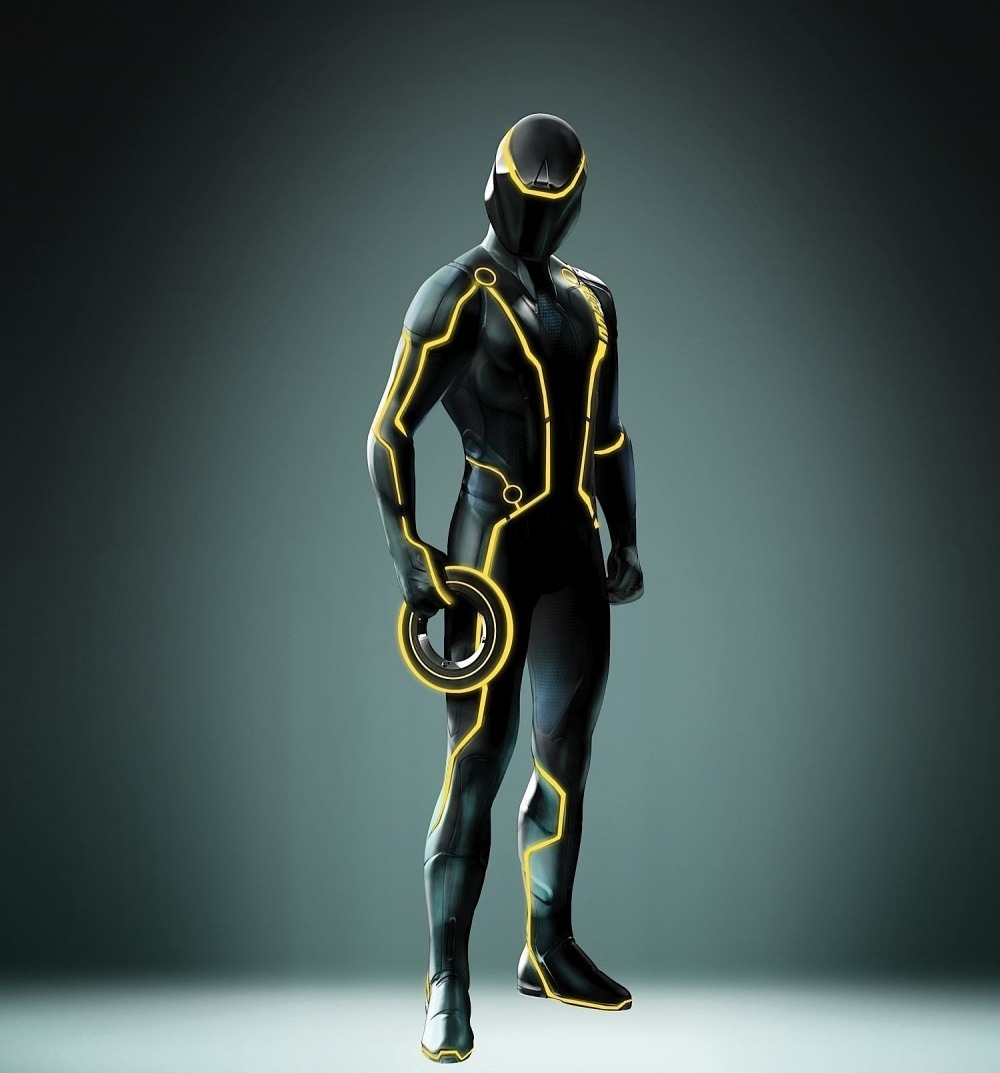
This Nutcracker was rife with sartorial confusion and uneven in the quality of its dancing, all in all having a better time with the first act than with the second. Frau Stahlbaum's bustle and hobble skirt read as late Victorian (1880s) while her guests wore circular hooped styles from the early 1860s. Guests were comfortable enough to mix day and evening dress, enough that some came in dark plaids and calicos more suited for rough work.  On the fantastical side, the Kingdom of Sweets was rebranded as a Kingdom of Pastels, with a very pink Sugar Plum Fairy presiding over a menagerie of pretty but anonymous feature dancers, including Candy Cane in a photo negative of Tron Legacy battle suit.

The children were the highlight here, having an excellent time playing with each other on stage under the eyes of indulgent parents. Marie (Jenny White) is clearly the queen bee of her social set, dolls included, and Noah Hug made me feel sorry for his Fritz. While he could be played as just a pest, Fritz wandered the stage looking lost, kitted out in an unusual peach-colored sailor suit among a sea of velvet suits. His mischief looked like that of a lonely little boy convinced that he could make a place for himself, if he ran at one fast enough.

In contrasts, the adults were a great deal less memorable. Luckily, the choreography provides sufficient detail so that they were not wholly homogenous. Drosselmeyer (Brett Bauer) was a benevolent guest who seemed determined to play down his mysteriousness. I wanted him and his cape to have more flair than dutifulness. Even the mice seemed similarly functional, sufficient to move Clara from the familiar to the fantastical with the smallest amount of dramatic impact needed to be seen under dim lighting. Granted, the dancers were likely very tired from a long performance season, but I wish the whole house sequence seemed less perfunctory. It shouldn't be just a placeholder until the good bits start.

Luckily, good triumphed over evil, and a beautifully turned out Nutcracker (Wyatt McConville-McCoy), and led Marie into the forest and the start of the "good" dancing. The Waltz of the Snowflakes is a sentimental favorite, and I have discounted many productions after seeing their treatment of this sequence. While the OBT is not a Balanchinean company, its corps de ballet responded beautifully to the choreography. Most of all, they looked like they enjoyed dancing it and were hungry for more of the same. This was the only place where I wished that the tempi could have been more dramatic (another 10-15 ticks on the metronome wouldn't have gone amiss), but for smaller favors, I would settle for a more human-like and less shrill choral sample.

Act II drags everyone into the Kingdom of Sweets, or in a desperate search for more appropriate descriptors, the Pastel Boudoir Kingdom Situated in an Enchanted Forest Glade. Given that this was Portland, I shouldn't be surprised that Clara and the Nutcracker weren't given sweets for feasting, but the odd costumes and sets seemed determined to break any mental connection between the plot in progress and Nutritionally Empty Items.

Some blurriness in the footwork was inevitable given that the company does not specialize in Balanchine, but in general the soloists danced them well. My only disappointment was Dewdrop (Xuan Cheng Haiyan Wu [Sorry for the incorrect attribution]), whose dancing shrank as the Waltz of the Flowers proceeded. Cheng had lovely clarity in her footwork, but it came in such tiny dancing that the effort seemed wasted. By contrast, Haiyan Wu, formerly with the Miami City Ballet, gave an orthodox interpretation of Coffee, though Exoticism in her costuming seemed to have been mostly transmuted into suggestions of Harem instead. It seemed too obvious a turn into sexpot territory, and I was rather uncomfortable with the wiggling.

Luckily, the Sugar Plum Fairy (Ansa Deguchi) and her cavalier (Michael Linsmeier) rescued the fizzle with a truly grand pas de deux. It was perhaps not true to style, but I couldn't mind a slight detour into Ballet Russe ardor if the dancers were absolutely sincere in their dancing. Deguchi is a small woman, but on the shoulders of her cavalier, she glowed with loveliness and triumph as she whipped the entire auditorium into a screaming frenzy.

I staggered to the theater wondering whether the OBT could become my new "home" company. In December and even now, I'm glad that I went, but given my limited resources and my absolute need to see my "home company" (now on the opposite side of the country), I'm not likely to attend again unless multiple factors (read: ticket prices/dancing/sartorial decisions) improved.

[Edited minutely on 20140730 for Drosselmeyer's grammar and sexpot wiggling.]

08 November 2013

The Suzanne Farrell Ballet, Program A, 7 November 2013

Program A: Mozartiana, Episodes, Romeo and Juliet
The Suzanne Farrell Ballet
Thursday, 7 November 2013
Eisenhower Theater, Kennedy Center
Washington DC
Orchestra Left, S3


Everything was a little off-kilter in Mozartiana tonight, as if the energy hoarded for last night had bursted at a few seams. We were left with some interestingly conceived dancing that didn’t seem to belong to the same ballet.


Natalia Magnicaballi has a luscious rubato and uses it intelligently. While I liked Ogden yesterday, she anticipates the music too much and that occasionally comes off as a lack of confidence. Magnicaballi allows her phrasing to flow through the music, never hurrying her movement for the sake of the next beat. Part of that power comes in her calm upper body, extending her head, back and arms so that the movement always feels completed to its full potential.


Perhaps it’s part of Magnicaballi’s emploi, but there’s always a sense of fragility in her dancing. Today it colors the Preghiera (as it did in the Riccercata yesterday) as tragedy. It was not an invocation as yesterday, asking divinity to use her as instrument; it was instead a sacrifice and she was the courtly victim, Andromeda on the rocks as appeasement or intercession.


There was a new cast of girlish attendants, attendants to the doomed bride. These girls are older than yesterday’s cast, and there is not enough physical contrast between them and the womanly attendants, nor between them and Magnicaballi.


It was yet another interpretation from the four (or five) that I have seen, and I was looking forward to how that theme would be developed. Unfortunately, the Gigue happened.


Kirk Henning has elongated limbs that seemed more suited to the geometry of petit allegro. While still not quite satisfactory, it was an improvement over Grosh. However, his usual musical intelligence seemed to have failed him today. This was a frolic worthy of the Soviet clown out of Swan Lake. I won’t say that he simpered, but the uncomplicated cheeriness made the fine music insubstantial. It did not follow what has come before and made me wonder whether I had sleepwalked into a different ballet between movements. Once again, as with Grosh, he was most effective while standing still in the Menuet. His leave-taking was flirtatious and seemed oddly inappropriate for a courtly jester, whose dreams of dignity exists only on my soapbox.


Again, not much to say about the Menuet. Once one sees the shepherdess curls, one cannot unsee them.


In the Theme et Variations, Magnicaballi gave a command performance of the solo variations. It was a masterclass in phrasing. Again, like Ogden, the execution seemed spontaneous and yet endlessly complex.


Pavel Gurevich is Magnicaballi’s cavalier today. While the two are long-limbed and seem physically suited, their dancing was less harmonious than what was promised by their promenade. Gurevich moves well for his size and build, but his upper body lurches oddly upward when jumping. The partnering looked curiously underrehearsed. Their spacing was off, and there were a few parts in which he looked like he was manhandling Magnicaballi in the partnering.There was one turn en attitude in which I could only focus on his hand gripped around her wrist, while her hand trembled above like an autumn leaf. Magnicaballi looked visibly off-center after the pas de deux, and all but staggered off the stage. It was more than a little disastrous, and the whole thing made me think longingly of Momchil Mladenov, one of Magnicaballi’s former partners of a similar build, since retired from the company.


The Finale was an uncomplicated relief. Henning and the girlish attendants came together in joy, Gurevich and Magnicaballi tried to remember the distance between their respective limbs, and the whole thing came to a triumphantly relieved end.


Allan Lewis conducted the orchestra. As with last night, it was a finely textured rendering, marred only by the clarinetist, who seemed to have forgotten his fingers. The reed also seemed suspect in the higher notes. The lighting changes were more noticeable than tonight. I started to squint during the pas de deux and realized that my eyesight was not in error. It is a modern intrusion and was unappreciated. Also as with last night, I tried very very hard to ignore the flouncy flounces on Magnicaballi’s gown. It was easier today with all of the other bewildering things that were happening simultaneously.


I mentioned last night that black-and-whites are hard for me to digest. Unlike the gentleman sitting next to me, I cannot follow the tone rows without sheet music. I spent most of yesterday’s performance sorting the bodies on stage so that I can match the action to the music. It’s a cheat, of course, but repetition and a perverse appreciation for arbitrary musicality yields enough amusements to make the endeavor equitable.


Last night I ranted on the opacity that is Episodes. Episodes of what indeed. My growing suspicion, planted last night, that these were episodes of episodes. In other words, it’s a sequence of events that loop back upon themselves in reference. It is much like the Four Temperaments, except the repetition is not both melodic and choreographic. Instead, it is only choreographic, integrating thematic ideas and the choreographic conventions that came before in tighter and more enclosed rounds.


At intermission today, I mentioned that the whole thing reminds me of PDQ Bach’s Art of the Ground Round (Opus 3.19/pound). That was a tour de force of parody upon the convention of the round (think row, row, row your boat). The idea of rounds is something that keeps popping up in this piece, and the whole thing makes me wonder whether Balanchine has constructed one hell of a joke.


Symphony, Movement 1, is a masterclass on rounds. The opening tableau is even vaguely circular, as are the opening arm isolations. The dancing starts with simple rounds, in which one couple does a movement, the next couple replicates two beats later, repeat until finished.


The dancers then start a second round, escalating the complexity as dancers find rules to play with. First, the corp chooses to replicate the main couple in the same direction, in the next round they choose to replicate in contrast. Then the corp decides that moving in unison among themselves is boring and that they should move in tight contrast to each other even as they are still moving in counterpoint to the leads.


The pairs then get tired of each other, and suddenly it’s time for rounds with genders. First it’s straightforward rounds with men and women, but then for added complexity, the lead man and woman extract themselves to create two more layers of moving bodies. I felt like a giant game of choreographic Twister and I was a little cross-eyed, trying to keep score.


Valerie Tellmann and Matthew Renko were the leads today. Both the music and the dancing were more confident when compared to yesterday, which also made it easier to keep track of the action.


Webern is difficult, and the dancing can be obscure. I heard one audience member behind me muttering in dismay. She was advised to “try to take a nap, if she could”. Disappointment is to be expected, but I wish it didn’t have to be so loud during the dancing.


Jordyn Richter and Ted Seymour were the leads again in Five Pieces today. At first glance, they seem like anecdotes that seem to to have nothing to do with rounds, but they provide thematic material for integration later.


I labeled these as “episodes of unreadyness” in my head. The woman and the man are never in the same physical or mental place. Richter plays it straight. Her acrobatic antics are tools to befuddle poor Ted even further. He wants to look up, she looks down. He looks for her, she hides behind him, legs in the air creating the ballet equivalent of bunny ears (antlers!). Ted wisely does not overact, letting the absurdity of the choreography enhance his guileless expression.


Concerto, the third movement, puts elements of the first two movements to work. The dancers start in a simple round, but as they escalate in difficulty as in movement 1, the lead couple incorporates the juxtaposition of purpose seen in movement two into their dancing.


Michael Cook and Elisabeth Holowchuk danced again today (Holowchuk substituting for the scheduled Paola Hartley). I hadn’t particularly liked his dancing with Magnicaballi, as their reciprocal comfort often looks like complacency, but he’s working out quite well with Holowchuk, who seems to to have an adversarial relationship with him on stage.


The last movement of Concerto made me laugh, as it was literally a round of women surrounding Cook. Just to make sure that we haven’t missed it, we also start with Holowchuck tightly encircling Cook with all the limbs she could find. It’s got to be some sort of a joke, but the final choreography for Cook is that of a man desperately looking for a way out of a round.


Last night, the preceding contrast of bodies stood in counterpoint to the physical homogeneity of Riccercata. Tonight, the preceding fugue of choreography was startling when we arrive at the conventional choreographic voicing of the Riccercata, an orchestration of Bach’s Fugue in 6 voices from Musical Offering (BWV 1079). Webern’s orchestration adds instrumental texture even as it preserves the (dare I say) conventional harmonics of Baroque music. It was a weird return to normalcy after the stringent compositions that preceded it. (I felt the audience members behind me stir in interest, and then in appreciation. Nicely done, Mr B.)


Six groups of dancers, five corp groups and the lead couple, represent the six moving voices, though the lead couple retains the singing melody at all times. It is a moving tableau of bodies, exploring permutations on a motif. Heather Ogden and Ian Grosh were the lead couple tonight. She was majestic in contrast to Magnicaballi’s restrained melancholy, and Ian Grosh found the dignity and simplicity in movement that should have gone into Mozartiana. When they finally bade the curtains to go down, Ogden gestured with authority, imbuing her hands with weight. Here endeth the masterclass, they say.

I don’t have anything to add to last night’s observations about Mejia’s Romeo and Juliet. Holowchuk and Henning make it work despite the choreography, though they were less spontaneous in performance tonight. Despite some sour flourishes by the french horn, Tchaikovsky got another elegant performance, its floridity sufficiently subdued to keep it on this side of parody.